Melons
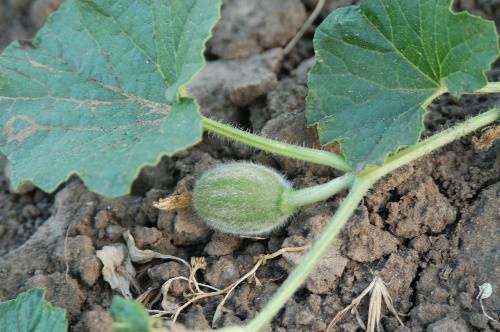
Melons are tender, warm-weather vegetables that require a culture similar to other vine crops. There are many different types of melons and most of which perform well in Kansas. Most melons are large-vined plants, although there are some newer, more compact varieties. This section doesn't talk about cantaloupe or watermelon. Para información en español, visite este sitio web.
- Winter melon. Other melons such as honeydew, crenshaw, and casaba are considered winter melons. They have smooth rinds, minimal odor, and do not “slip” from the vine like muskmelons.
- Oriental melon. This type of melon, sometimes called Korean melon, has become more common in the United States in local farmers markets, although it is still fairly uncommon. These melons typically have yellow skin and white, crunchy flesh with a mildly sweet, sometimes floral taste. These are the earliest maturing melons.
Early to mid-May is a standard planting date throughout most of Kansas, but planting can be done later as well, allowing about 100 days until the expected first frost date. Melons can be transplanted, but it is challenging in windy conditions due to their very fragile stems. Melon vines spread 6 to 8 feet wide, so row spacings of 6 feet are necessary, with individual plants spaced every 18 inches to 2 feet in the row. Types with compact vines may be able to grow in a 2-by-2- or 3-by-3- foot space. Many melons can be successfully grown on a trellis, with one to two plants per trellis. Honeydew melons typically turn a creamy color rather than have a green cast when ripe, and may develop a more waxy texture to the rind. They do not slip. Casaba, crenshaw, and Oriental melons do not slip from the vine but do develop a yellow rind color and exhibit a slight softening at the flower end opposite the stem. Melons will not ripen off the vine, although they may improve in flavor somewhat if left at room temperature for a few days. For recipe ideas see the Canteloupe page.